


Description and Application
A beam homogenizer uses prolonged scattering to convert a collimated incident beam into a beam with a specific shape and uniform intensity distribution. It can achieve the desired beam shape for any input wavelength. The main advantage of a laser homogenizer is its insensitivity to variations in beam quality and intensity of the incident laser, making it suitable for homogenizing lasers with lower beam quality or stability. The laser homogenizer can maintain uniformity in the beam spot while achieving sharp boundaries and high optical efficiency. The quality of the output beam spot is also significantly related to the parameters of the input laser. Laser homogenizers are used in various fields that require uniform intensity beam spots, such as laser drilling, ablation, scribing, marking, cutting, welding, laser testing, inspection, and medical applications, including spot removal and cosmetic treatments.
Features ①Single-mode/multi-mode lasers are both applicable②Good Beam Spot Uniformity ③Sharp Boundaries ④Capable of achieving any beam spot shape | Applications ① Laser Welding ②Laser Cutting ③ Laser Drilling ④Laser Medical Treatments and Cosmetic Treatments |
Parameters
| Wavelength [nm] | 1064 |
| Required beam diameter[mm] | 7 |
| Beam Mode | Single-modeTEM00 |
| Component Parameter | |
| Material | POG/Fused Silica/Plastic |
| Diameter [mm] | 20 |
| Aperture [mm] | 17.5 |
| Thickness [mm] | 3 |
| Coating | AR/AR Coating |
| Output Parameter and Estimated Performance | |
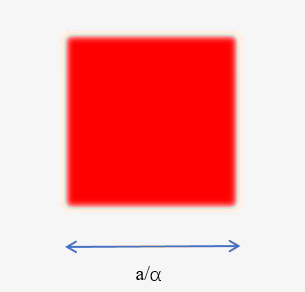
| Output Shape | Square |
| a (100mm处) | 4.80mm |
| α | 2.75° |
| Transmission Efficiency [%] | Nearly 100% |
| Total Efficiency[%] | ~ 70 |
| Zero-Order Relative Incident Beam | <1% |
| Uniformity error[%][(max-min)/(max+min)] | <8% |
